


The Process

Updated: Jun 19
You know that Charles Bukowski quote:
“Find what you love and let it kill you”?
That’s me! :D
While my dedication and obsession with this craft has been a life-long venture, the last three years, I’ve given everything I’ve got to these novels.
Countless hours, lost sleep, bloody, tear-stained pages. Even my health has been put on the back burner. That’s not a flex. I know there are far more important things than writing, but sharing my work means more to me than almost anything.
Yeah. I’ve made sacrifices, and in the process of writing the Pivotal Dawn series, I’ve also learned more about myself, and publishing, and publicity than I did in the thirty-plus years proceeding it.
I mentioned in my first entry that I finished some high fantasy novels back in late 2018. Those novels are a huge part of my legacy. They’re long. They take their time in getting to the point, but they’re absolutely one of my greatest accomplishments to date. They were also the foundation by which I was able to begin writing Pivotal Dawn. They taught me how to persevere. How to stare at blank pages for days, and stew on ideas for months, waiting for exactly the right twist or scenario to invigorate me. Yet, at the time, I had no idea what I was doing. For that reason, writing those books were far more difficult than they would have been if I knew then what I know now.
Such is the process.
When I started work on Grinning Dragon, (the first book in the Pivotal Dawn series), it had been a few years since I wrote anything. Delving into YA Romantasy seemed like the easiest path for a tattered soul to walk. With those exceptional young people cheering me on, getting started was simple, but there were still plenty of obstacles to be conquered. I’m actually not entirely convinced that obstacles ever end.
I got started on Grinning Dragon like I’d always gotten started on my projects: with the characters.
I needed a protagonist I could relate to, but I didn’t have to grab a flashlight and go calling for her in the woods. Jin was waiting for me. Being surrounded by middle schoolers had put me back in touch with the kid I used to be. The one who never would have admitted that she loved the romance in the books she read almost as much as she loved the magic, swordplay and political scandal of the complex worlds wherein those romances were built. The one who dreamed of finding her happily-ever-after in a bright and beautiful stranger...
And there she was.
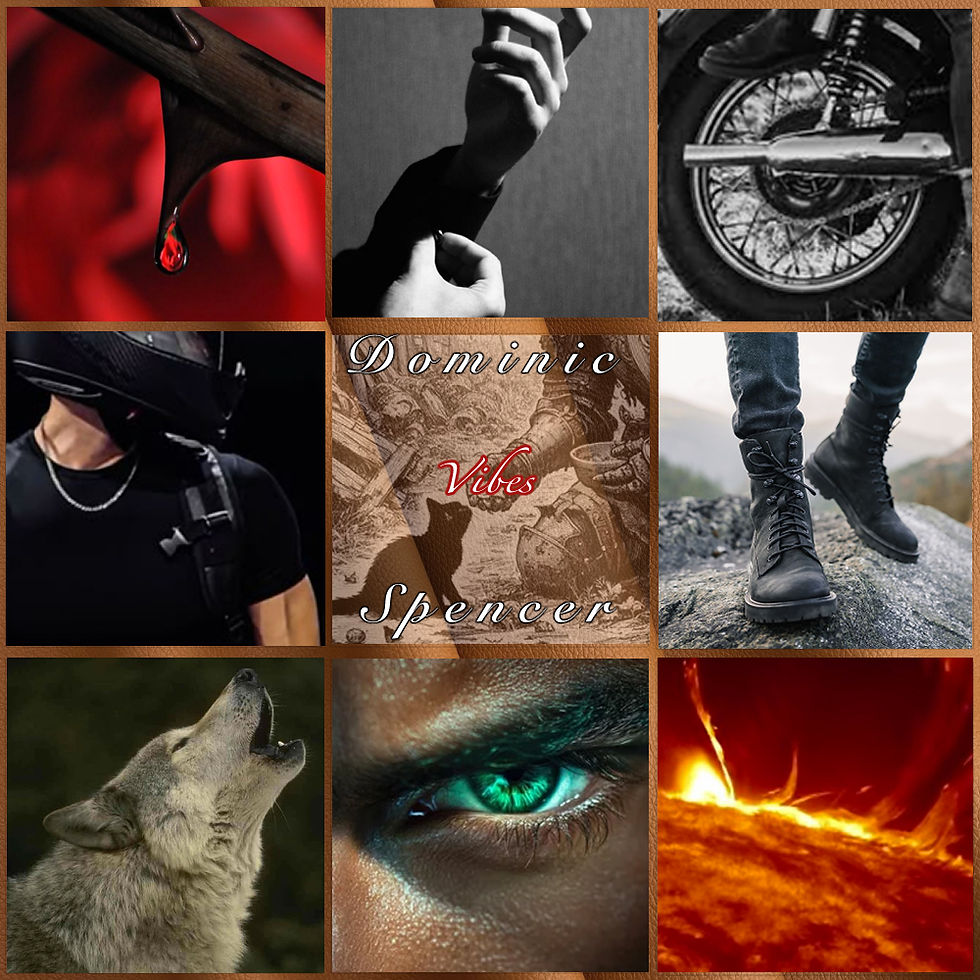
My protagonist, along with the shadow of the beautiful stranger who would become Dominic Spencer.
I gave Jin Type 1 diabetes because as a Type 1 diabetic myself, I don’t see accurate representation of this disease depectiedin film or literature very often.
I put her in the “real world” because this is where you, and me, and everyone we know is forced to live.
At the starting of Grinning Dragon, I wrote things chapter by chapter, as I had with my first books. Over the months, as the plotlines and characters of Pivotal Dawn grew, so did I. I learned how to write better. How to write faster. How to inspire myself. All of the things.
I'm probably going to get some hate for this, but most of what kept me inspired during the writing of this series didn't come from reading novels in my chosen genre.
Instead of ranting about how the completion of this series was accomplished, I figure it’s more productive to break it down for my readers, and for any other aspiring authors who might have stumbled upon me. (Hi!)
Thus, without further ado…
Establishing how it begins.
Once I’ve met my characters, it’s time to jump into the first chapters and establish how things start, so that I can establish where they go.
During the course of the first and second novels, I pretty much just winged everything, or waited for what came next to creep up. I still think that “meditating” on particular twists or scenarios is important, but eventually, waiting can be extremely discouraging.
So, when the third novel became particularly challenging, I started doing things a little different.
Overcoming writer’s block.
For me, one of the most effective ways of overcoming writer's block is simply in creating notes.
I jot down notes on the notepad in my phone about fifty times a day or more. Anytime inspiration strikes, I’m quick to get it all down, where it will be waiting to be transferred into those relevant chapters or idea folders stored on my computer. Reading those notes can really accelerate my creative drive, and indulging bursts of inspiration throughout the day, every day keeps me inspired..
Outline, outline, outline!
It should come as no surprise that one of the best cures for writer’s block, can be writing.
Here’s what I mean by that.
I’ve known other writers who have taken five years to get one chapter finished.
I totally get it. Even now, after everything I’ve learned, I find that when I sit down to write, I sometimes still have to remind myself, “It doesn’t have to be perfect.” You can’t edit a blank page, and sometimes the biggest blocks, are our selves.
Getting to work on a project and expecting everything to be perfect the first time you begin writing something slows things down, and sometimes brings us to screeching halts.
If you have the premises for what you want to write, start there, and write. It’s insane what comes out, and how we can surprise ourselves when we simply…let go.
Taking things chapter by chapter all sorts of slowed down my process, and created major blocks.
That's where outlining came in.
Later, I moved on to creating summaries of what I wanted each chapter to be, and what events or conversations took place within said chapters. Now, using the “let go” method listed above, I like to outline each chapter at a time, but do as much as possible while I sit at my computer. Letting my mind slip away, and my hands do what they do: create.
As soon as I have outlines, I use those to start writing each new chapter. That way, I have a reference on which to build from, and can combine letting go with productivity. Then, when I begin editing what awaits me, I become twice as inspired, because that plug between myself and my work has been removed, and the process simplified: take notes. Outline. Write. Write. Write! Polish. Polish. Polish. Sparkle!
This technique enabled me to finish both book four and five in record time without compromising the integrity of each story. It was awesome.
Music
If simply writing and outlining doesn’t work, I hunt for new music. For me, music has by and large been among the most fundamental contributors in staying inspired.
So, if you’re anything like me and you’re stuck on a project, I challenge you to undergo a quest. Seek out new music. Listen to the recommended songs or playlist based on the history of whatever app you use. Do it now!!
And keep an eye out for my character spotlights, because those will have playlists attached.
Finishing a book.
After it’s written. That’s when the hard part begins.
Editing. Editing, and oh! Look at that!
More editing.
My books have an average of eight drafts, but are more likely to be at about ten by the time they’re published. Does that mean they’ll be perfect? No. I’m dyslexia-girl, for sure, but having that many drafts gives me ample time to see things with new eyes.
Which brings me to the next thing on my list. I have been known to edit my books months, and occasionally even years apart.
When we write, (that's you and I), we’re in the muck of things.
I like to compare the writing process to everyday life.
We’re living it.
I like to compare editing to the end of our lives.
That’s when we can look back on everything we wrote, and see all those dumbfounding, magical patterns. We can see where things were leading. We can see the patterns for what they are, even, and especially if those patterns didn’t make sense at the time. Even when we didn’t know when we were weaving them.
Those are the things that surprise us, and if we’re surprised, our readers are bound to be, as well.
So, I write my books. I generally do three or four drafts before I let anyone read them.
I wait. I work on additional novels, and then I go back, and edit some more. Then, I continue to repeat that process accordingly.
When everything is said and done, the best tool any dreamer can utilize for overcoming anything, is tenacity.
Keep going.
Don’t give up.
In the meantime, I recommend making lists of things or people that inspire you, and whenever you learn something new, create a list of those things, also.
You can refer to your lists every time you start a new project. That way, your skill and your voice can continue to grow.
What to expect from Grinning Dragon.
Grinning Dragon is slower-paced than the other four books. I like to call this one, “their love story.”
The book is written to be blatantly cheesy. To make young audiences squirm, and adults give a wag of their head and a smirk before turning to a new page.
I take a lot of creative liberties when it comes to the vocabulary and grammar throughout the series, but especially in Grinning Dragon. I wanted it to read like it’s narrated by a sixteen-year-old girl. However, the writing, characters, and plotlines of each novel get increasingly immersive and complex. I'm so excited to share these books with you!
Traditional publishing vs. Self Publishing.
And finally, with three books totally finished and the next two halfway there on draft four, it was time to make that inevitable decision. Should I seek out a traditional publisher, or should I go it alone?
Over the months of writing Pivotal Dawn, I did reach out to a few agencies, but most of those were big fish in a vast sea, and I am a little guppy in a tiny bowl.
The last publisher I reached out to get back to me with a lot of encouragement, stating that while they didn’t think Pivotal Dawn was a fit at that time, they hoped I’d keep them in mind for future projects, and I probably will.
Still, for the last three years, I’ve attended some conventions and talked to numerous professionals. I’ve done a lot of my own research, and I’ve kept myself going with the same truths you might tell yourself. Harry Potter almost didn’t happen. Dr. Seuss was about to give up when he got discovered. Hell, even Michael Jordan was cut from his varsity team as a sophomore.
Am I saying I know everyone is going to love my work? No. Am I saying I’m guaranteed to find success in the field I’m unwilling to give up on? Also no, but dreams do come true. A lot of the time, those dreams happen when we’re about to throw in the towel.
Don’t throw in the towel.
First and foremost, remember. The best way to fail; is never to try.
It’s not always enough simply to write a book or complete a project.
But I digress.
I decided to go with self-publishing because, frankly, I’m tired. I’ve been working toward this goal for what seems like forever. I no longer have enough patience to wait six months to a year to find out whether or not an agency has found me trendy enough to publish. Even if one would, I don’t have the energy to work with a publisher revising everything, and then waiting months or even more years for my work to be released. You know what I do have? Anxiety. And my anxiety revolves around not having enough time. As things in the world seem to get progressively worse, it feels more and more like my window is closing. Most importantly, it feels like my audience needs my stories more everyday. So, I decided to cross my fingers, grit my teeth, and dive in. Spending what energy I have on building platforms and connecting with potential readers. (Hi again!)
Are you an aspiring author? If so, did you find anything useful in the detailing of my own process? What’s your process like? Are we alike, or do you do things completely differently than me? What techniques do you find super helpful? What are things you know now, that you wish you knew when you first started writing?
I’m thirsty for the tea. Talking to other authors or aspiring authors about their work is like…my own personal catnip, so please-please-please feel free to comment! I’d love to hear about your journey.
Thanks so much for joining me on this deep-dive into the evolution of my writing! I hope hoping my words here, as well as there, can help to remind you. Life is Art. Live it.
Up next, I’m putting my first, much anticipated spotlight on my teenage protagonist Jin Banksee.
I couldn’t be more amped up to get started on the fun stuff.
See you there!


Comments